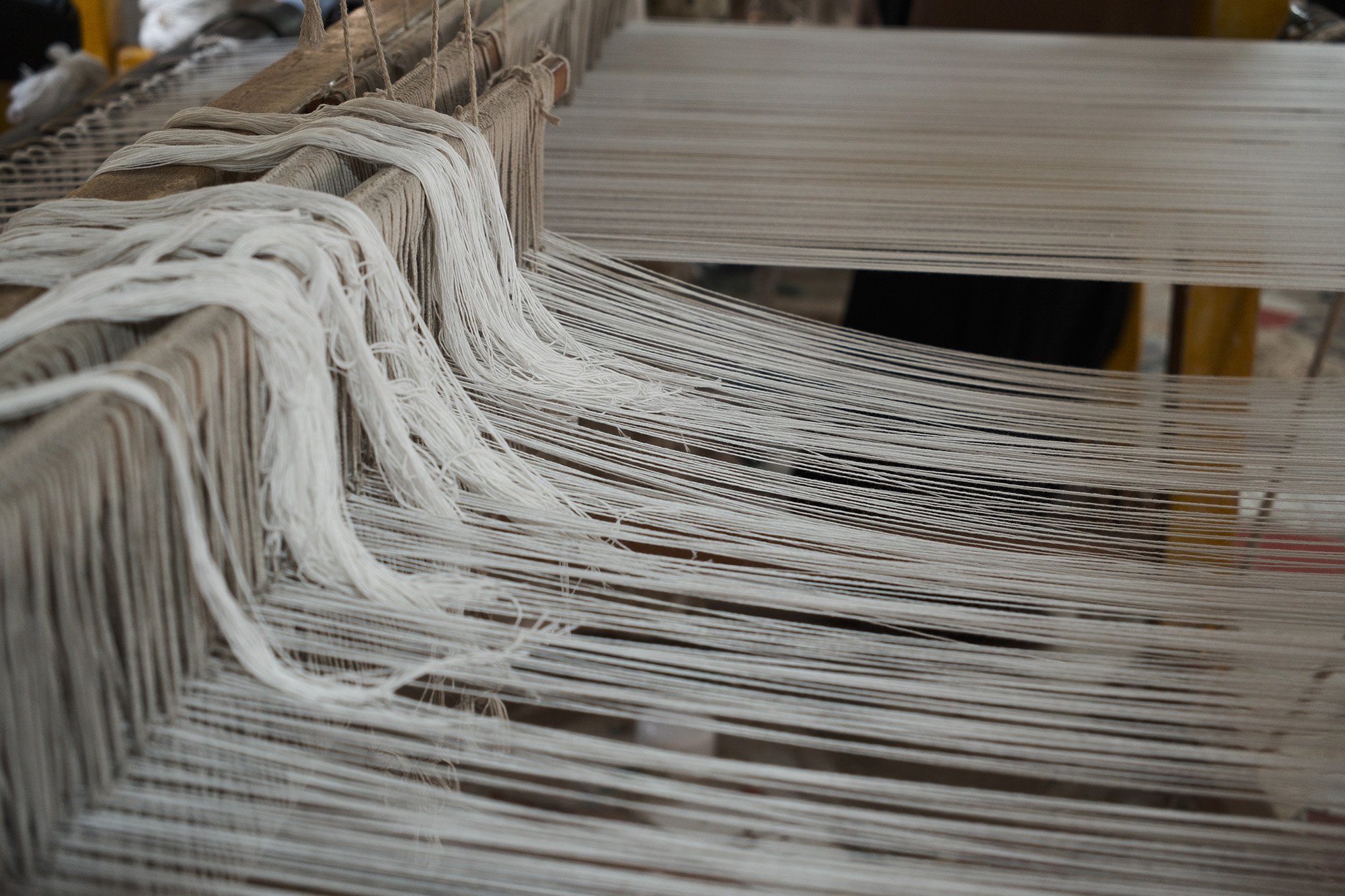
Atfeeh, Egypt
Visits to the workshop are always grounding reminders of why Ba was established nearly 5 years ago. Beauty and form very much lead the process, but preserving craft is the overarching raison d’être.
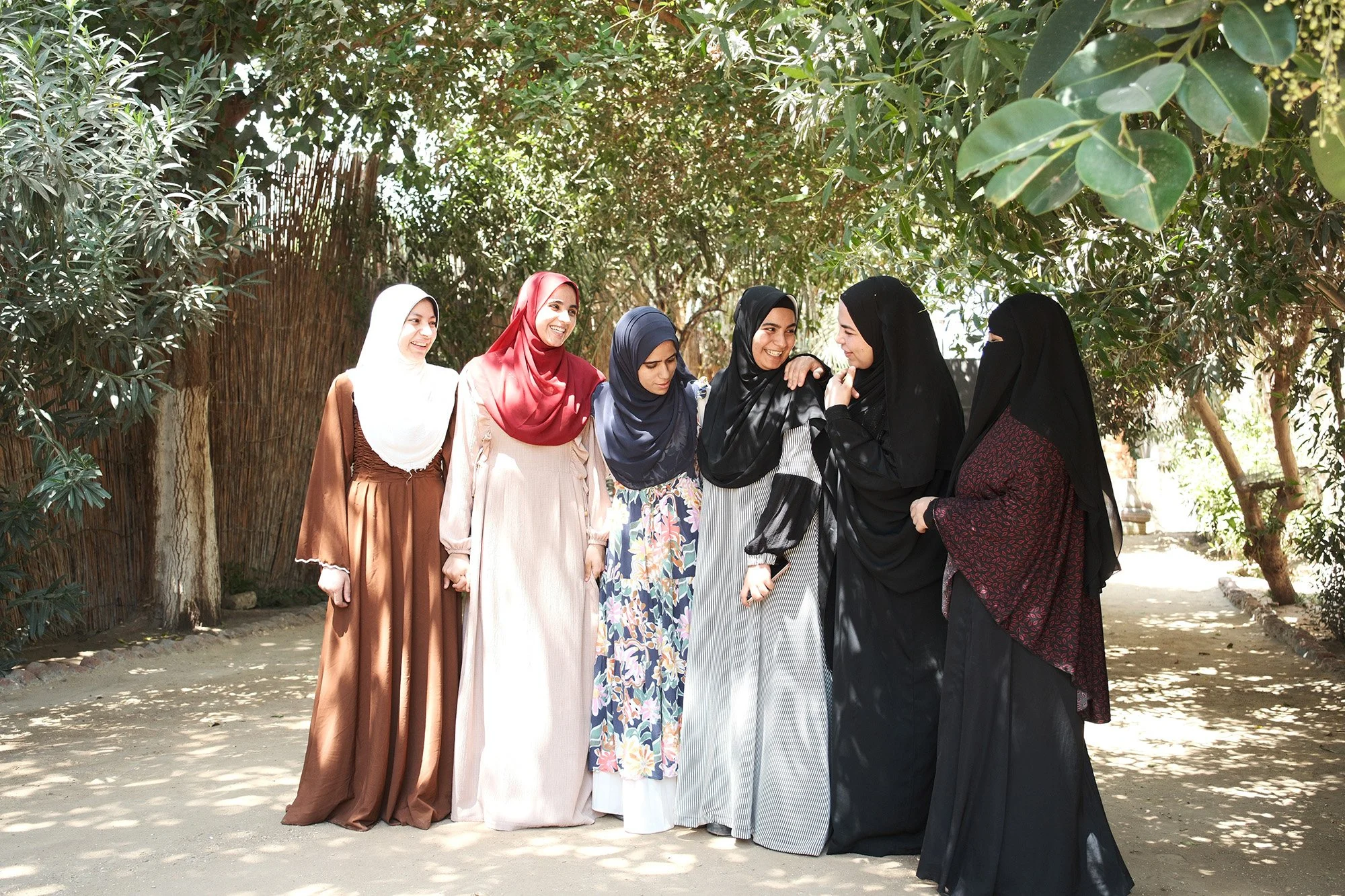
Female artisans at the workshop
It’s been the fourth year running working with mainly female artisans in Egypt. The workshop is run by the charity organisation Masr El Khier, to encourage women in the Atfeeh village to support their families through skills training and a stable income (this particular loom work normally commission based and male-dominated in the country).

Farmland view from the workshop
The village sits along the Nile delta surrounded by farmland, donkeys for transport and locals residing in low-cost brick housing, the quintessential Egyptian countryside scene. Despite being situated only a couple of hours away from Cairo, the environment is a huge contrast to the capital’s density, serving as a suitable backdrop to the pace required for weaving.
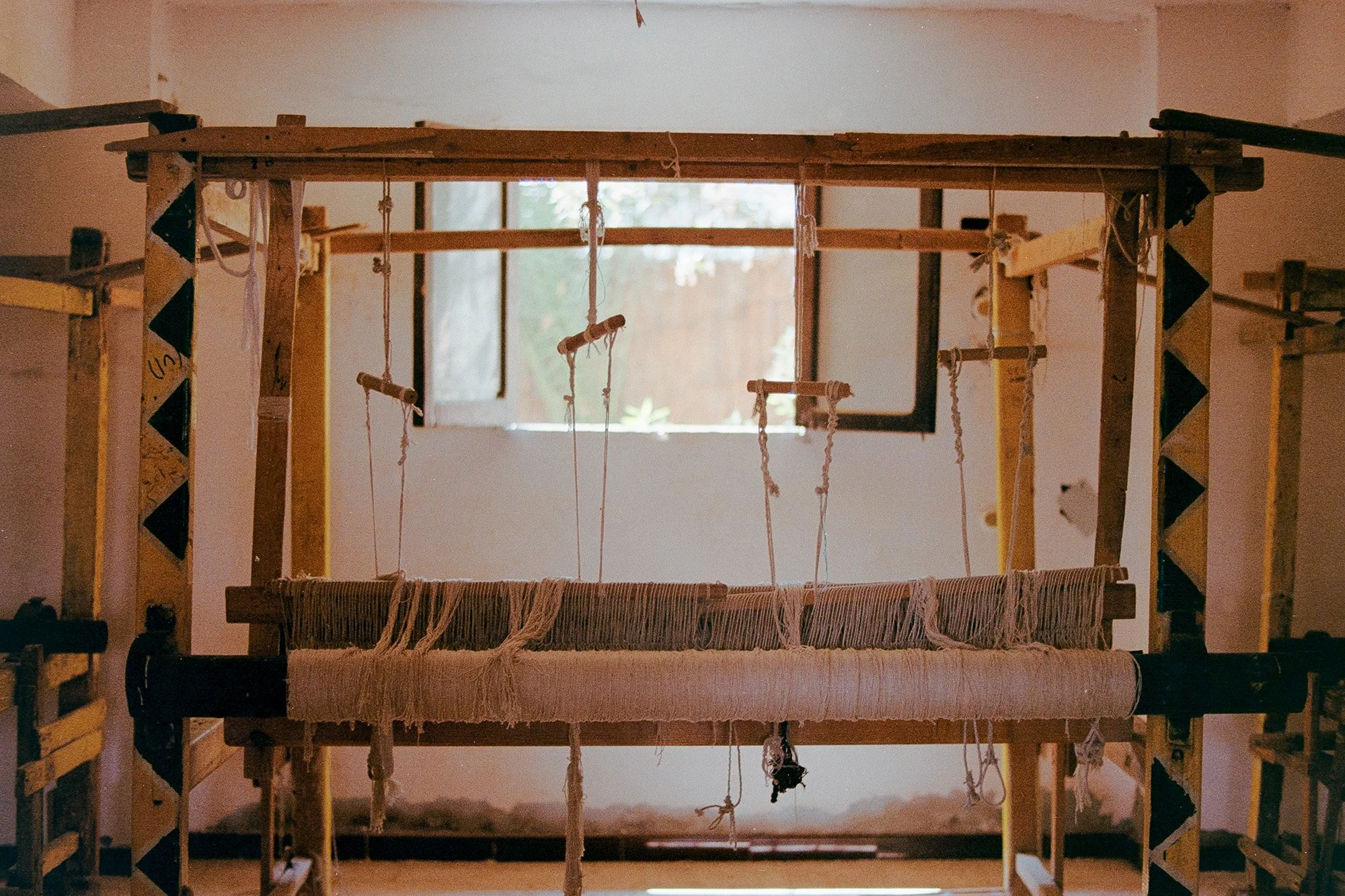
Pedal loom
Working on the loom in itself, is a slow process; spinning wool, picking colours, dyeing yarn, preparing the loom, before the actual weaving takes place. There is also patience required as the design reveals itself gradually, giving a sense of delayed gratification, of witnessing, thread by thread, the image coming into being (although not all paper designs translate well to tactile formats).
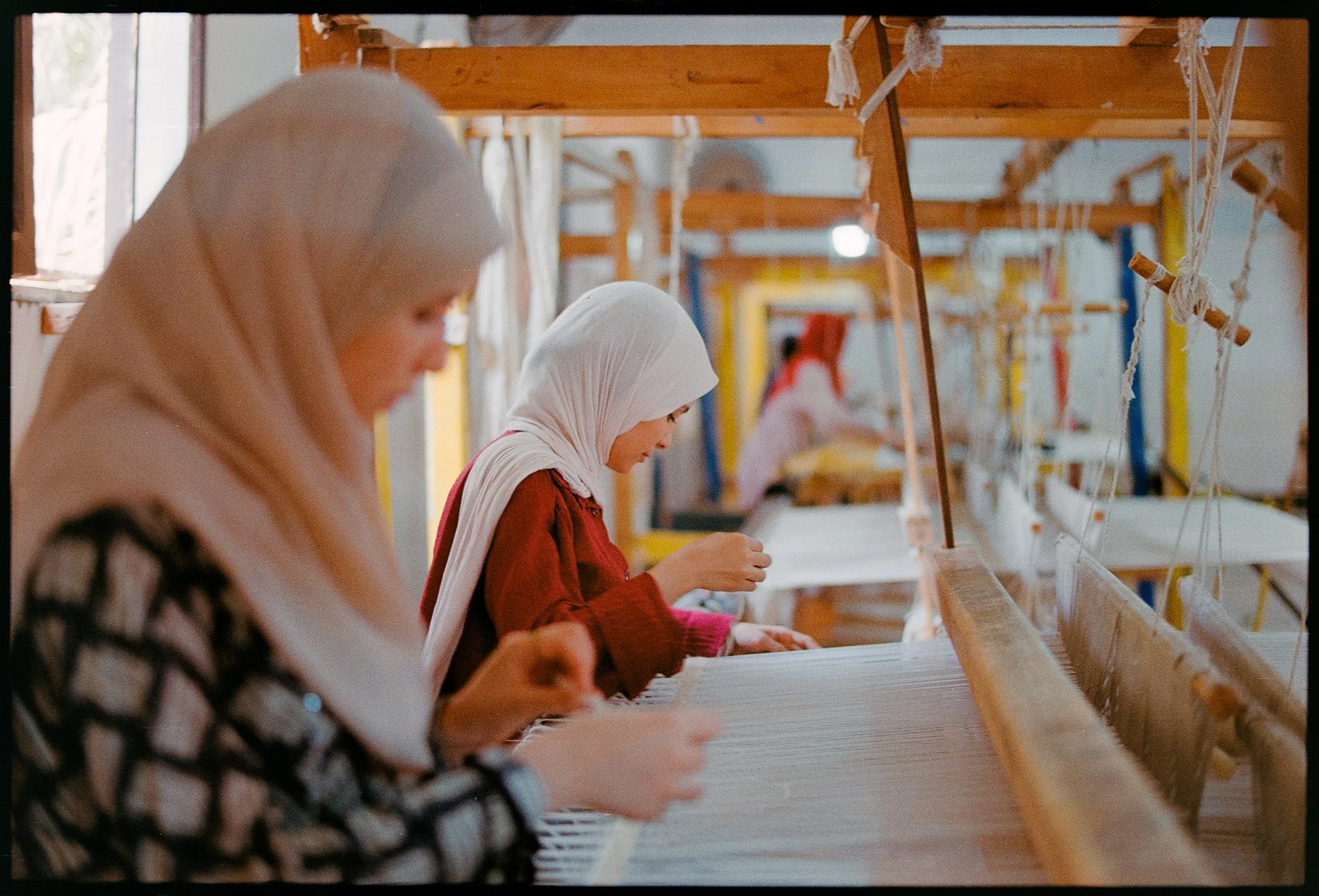
Artisans on the loom
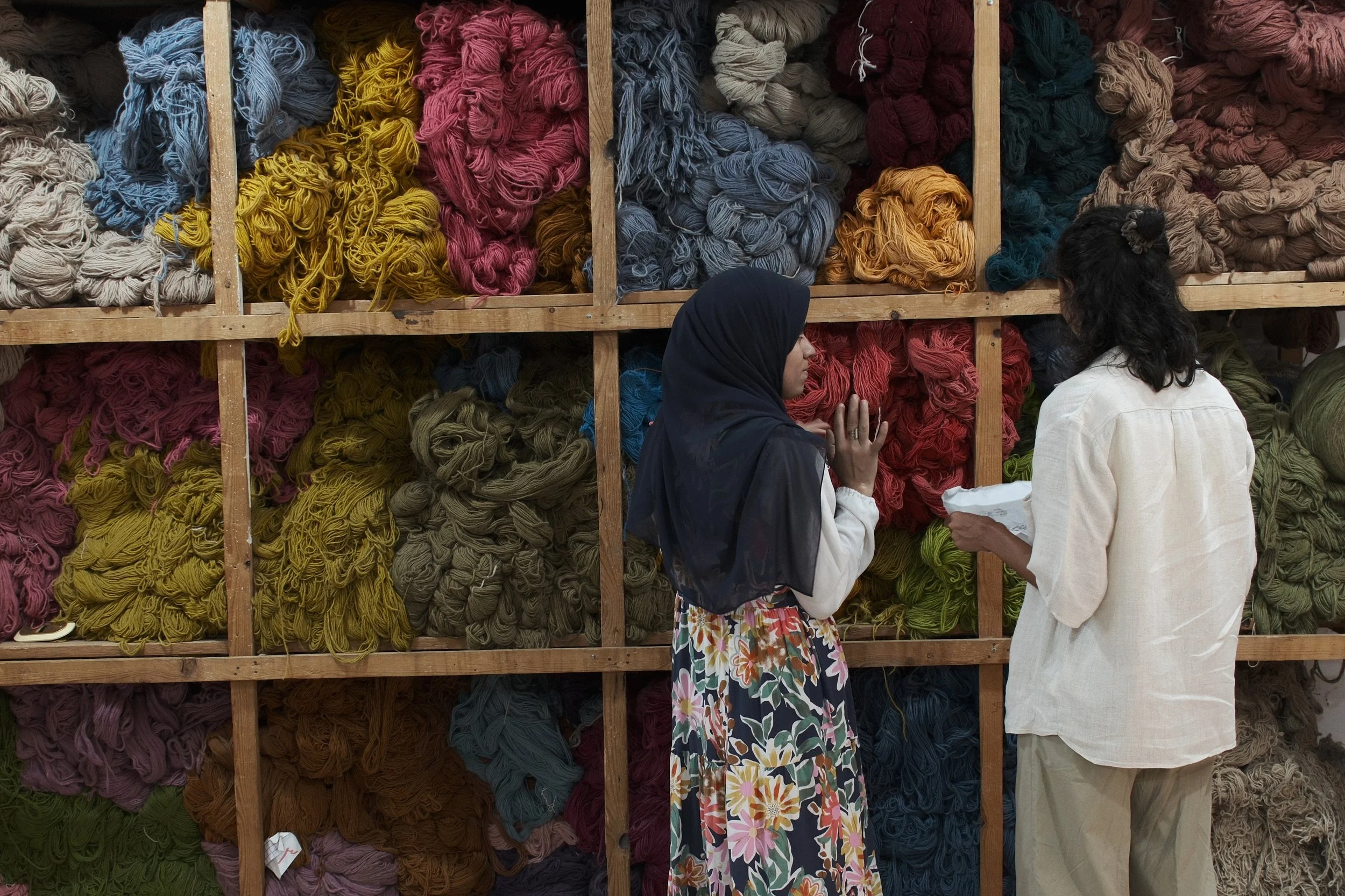
Choosing colours with Amal, the weavers’ manager
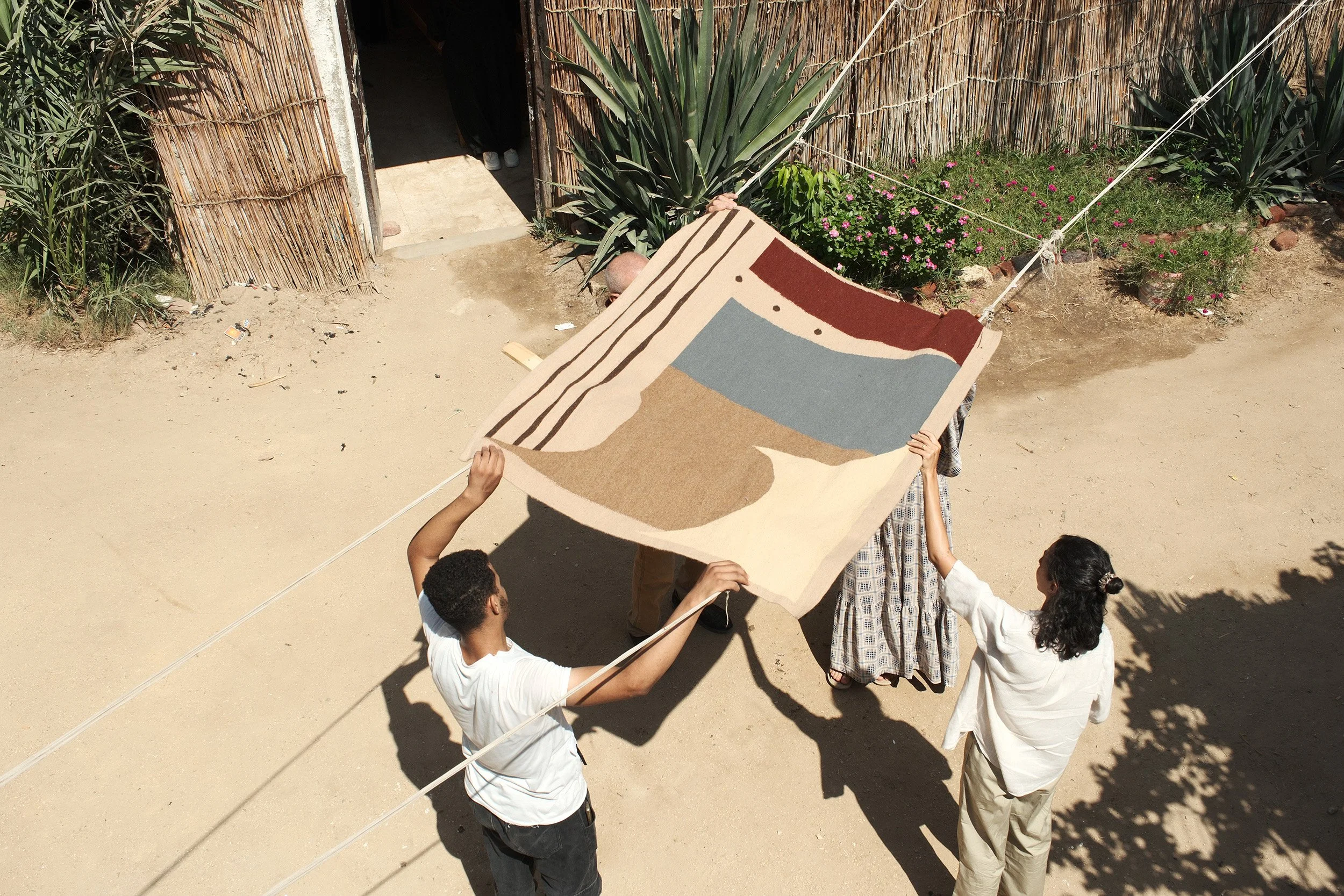
Tanoor tapestry
In a time where AI has slipped into our social fabric normalising its usage, the ancient technique of weaving is a reminder of Earth’s natural pace; honouring slowness and the relationship we still have to time, movement and matter. To the tactile world, of being and becoming.